


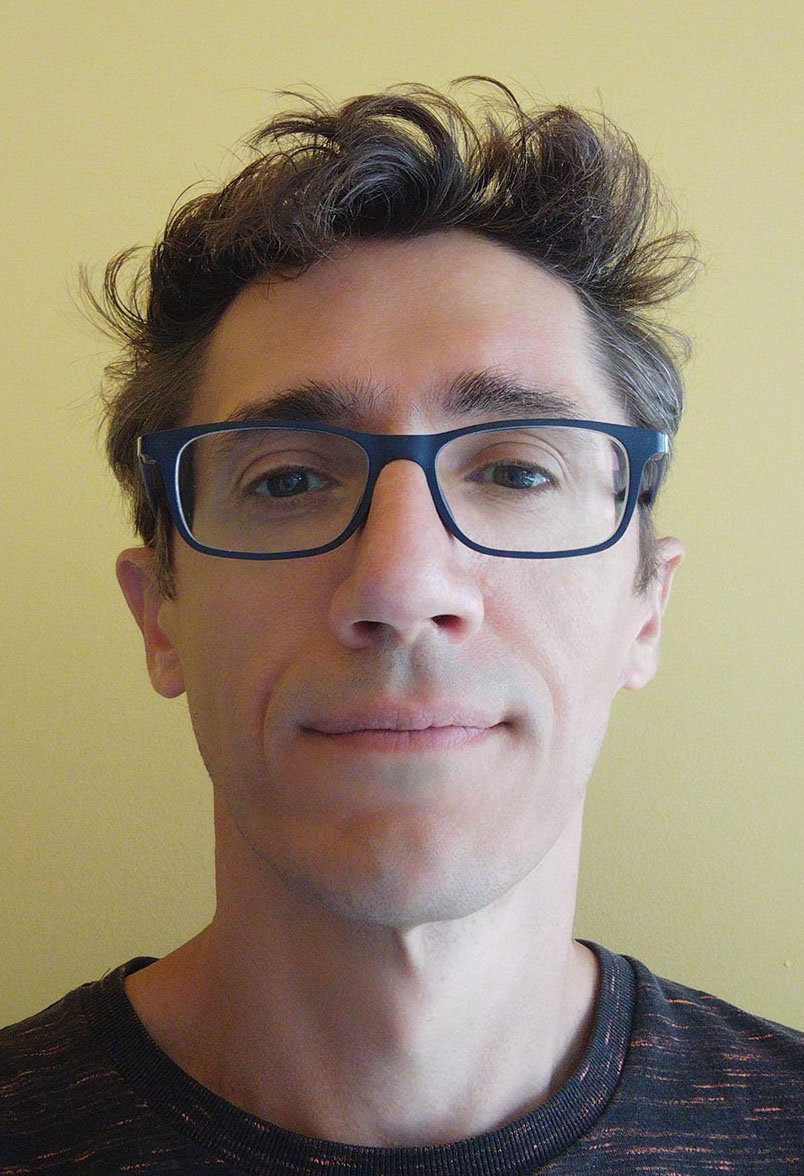
Marc Bajenoff, CNRS Research Director and head of the Immunobiology of Stromal Cells team at the Marseille Luminy Immunology Center (CIML, AMU/CNRS/Inserm), is one of the first 22 recipients of the national "Chair of Excellence in Biology/Health" program. Congratulations!
Reading time: 4 minutes
Exploring macrophages, essential immune cells in the fight against many diseases
Marc Bajenoff completed his doctoral training under the supervision of Dr. S. Guerder at the Marseille Luminy Immunology Center (CIML). He then joined the laboratories of Professor Glaichenhaus (Valbonne, France) and Professor R. Germain (Bethesda, USA) at the Section of Lymphocyte Biology, National Institutes of Health, for his post-doctoral studies. There, he used two-photon intravital imaging to analyze in depth the function of stromal elements within lymphoid tissues.
In 2010, he founded the "Immunobiology of Stromal Cells" group at CIML, and in 2015 received a grant from the European Research Council (ERC) to study the dynamics of lymphoid stromal cells. His general research interests focus on understanding stromal cell immunobiology and how these versatile cells control the immune system at different levels. More recently, his laboratory has developed a strong interest in the study of communication between stromal cells and macrophages across tissues.
Scientific project: NICHE "Stroma-macrophage two cell circuits"
Macrophages (Macs) are vital immune cells found throughout the body, contributing to the health and function of our tissues. Their absence leads to significant biological changes, underlining their importance. Macrophages play a variety of roles in different organs, from promoting neuronal growth in the brain to regulating bone development. They are also involved in various pathologies such as cancer. Macrophages can therefore be considered functional regulators of many of our body's key processes. Despite their importance, little is known about how these biological regulators are themselves regulated. The "Mac niche" concept suggests that specialized tissue microenvironments called "niches" regulate Mac development, instruction and behavior. The so-called "stromal" support cells, known to act as niches for immune cells in lymphoid organs, probably play a similar role in supporting Macs in various tissues.
The NICHE project proposes to study the complex relationships existing between immune cells and their microenvironments, offering insights into tissue balance and potential treatments for diseases involving macrophage dysfunction (from infectious diseases to cancer).
Chairs of Excellence in Biology/Health, a France 2030 initiative
Confirming the ambition set with the launch of the Plan Innovation santé 2030, the healthcare component of France 2030, to make France a leading country in healthcare, the president of France announced in June 2023 the launch of various support schemes to maintain and strengthen, on our territory, research excellence in the field of Biology/Health. A biomedical research base of excellence is a key first step in enabling healthcare innovations to emerge in large numbers and over the long term, with the aim of improving public health, strengthening our sovereignty and attracting international investment and major healthcare manufacturers.
The first Chairs of Excellence in Biology/Health awarded in 2024 are designed to retain and attract the best researchers in their field to France, and reinforce the excellence of French research. The reward is substantial funding to carry out major new projects in France over a five-year period.
Launched in May 2023, the scheme is operated on behalf of the French government by the Agence Nationale de la Recherche (ANR), and aims to fund a total of between 40 and 50 Chairs of Excellence. It is supported by a total budget of €80 million from France 2030.
Article published on May 24, 2024.
Discover also


Share on social media or