


Unbearable burning pain, red hands or feet as hot as a fire, and the only relief? ice-cold water. This is the daily experience of people suffering from primary erythermalgia, a rare, disabling and largely unknown disease. These patients are very often resistant to conventional analgesic treatments, or are forced to resort to powerful drugs such as opioids, whose side effects can be severe. Faced with this therapeutic impasse, a CNRS and amU team, in collaboration with AP-HP, has come up with a decisive breakthrough: mepyramine, an old antihistamine, directly blocks the key sodium channels involved in pain. Applied locally in cream form, it is highly effective in relieving patients' pain and redness. A discovery that opens up a new therapeutic avenue, offering tangible hope.
Reading time: 5 minutes
|
Key facts:
|
Primary erythermalgia (PEM) is a rare disease characterized by attacks of intense pain, described as a burning sensation, associated with marked redness and heat of the extremities, most often the feet and hands. These attacks occur in episodes, sometimes triggered by heat, physical exertion or even the simple wearing of shoes. Over time, they can become almost permanent, making walking and everyday activities extremely difficult. To soothe the pain, many patients have no choice but to immerse their feet in ice-cold water, at the risk of skin lesions.
In some patients, EMP has a genetic origin. In this case, it is linked to mutations in a gene called SCN9A, which codes for a sodium channel called Nav1.7. To understand, we can imagine this channel as an electrical switch located on pain neurons. Normally, it opens and closes in a very precise way to transmit painful information when a stimulus demands it. But in EMP, this generator becomes hypersensitive: it activates too easily or stays open too long. As a result, the neurons go into overdrive, constantly sending out pain signals, even in the absence of any real danger.
Diverting an old pain medication
Until now, the treatments available for EMP have been disappointing. Some sodium channel blockers, such as carbamazepine or lidocaine, may provide partial relief for some patients, while others, such as morphine, may be effective, but at the cost of significant side effects. What's more, their efficacy varies greatly from one patient to another, depending in particular on the genetic mutations involved. They turned their attention to mepyramine, an antihistamine formerly used to treat allergies.
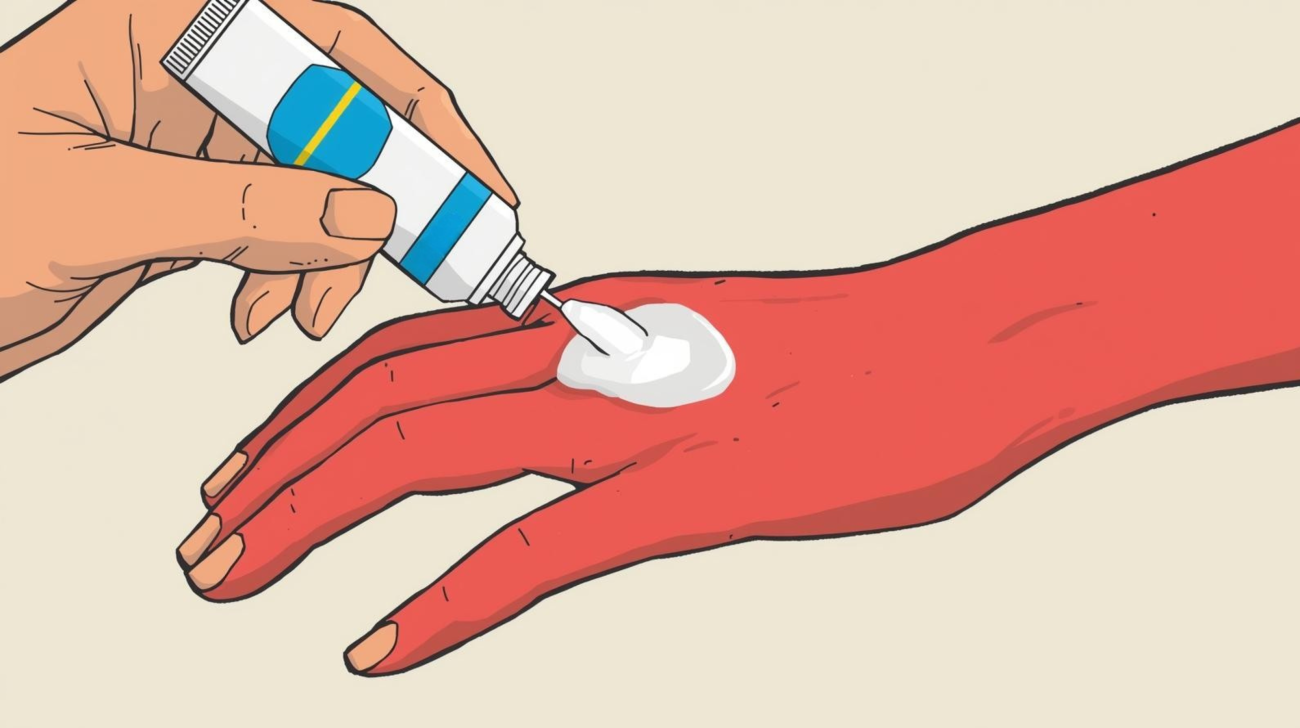
Mepyramine, applied locally as a cream, is highly effective in relieving pain and redness in patients.
To everyone's surprise, this compound also acts directly on several sodium channels involved in pain, including Nav1.7. In the laboratory, mepyramine proved capable of curbing the excessive activity of mutated versions of Nav1.7 associated with EMP, whatever the abnormalities responsible for their hyperactivity. In other words, where the faulty switch allowed too much current to flow, mepyramine acted as a dimmer to calm the flow of electricity. This action has been confirmed in various experimental pain models, showing a significant reduction in pain signals.
Unexpected and hopeful therapeutic spin-offs
Based on these results, the researchers made a strategic choice: to focus on local application. Since the symptoms of EMP are localized to the extremities, applying mepyramine in cream form enables direct targeting of painful areas, while avoiding systemic side effects. A mepyramine-based topical cream has been developed and tested on patients, including those with confirmed mutations in the SCN9A gene, with encouraging results: rapid and lasting pain relief, reduced redness and warmth, and better overall tolerance. For some patients, sometimes very young, mepyramine-based cream has profoundly transformed daily life. It has made possible simple gestures such as putting socks back on, going for a run, resuming a sporting activity or even getting back on a horse, which previously triggered unbearable attacks of pain. This approach is a perfect illustration of precision medicine:
"These results open up a new therapeutic avenue for patients who are often at a medical impasse. They illustrate how a better understanding of the fundamental mechanisms of pain can lead to targeted treatments that are better tolerated and rapidly transposable to the clinic", says Patrick Delmas.
It shows that old drugs can be "recycled" to treat rare diseases, provided that the biological mechanisms involved are well understood. For patients, it means hope of a better quality of life; for society, it means proof that basic research can lead to concrete, accessible therapeutic solutions.
Contact à ajouter
References :
Ducrocq M, Penalba V, Castillo L, Bodemer C, Greco C, Delmas P. Mepyramine targets mutant Nav1.7 channels to relieve pain and erythema in primary erythromelalgia patients. Front Med (Lausanne). 2025 Dec 12;12:1744968. doi: 10.3389/fmed.2025.1744968. PMID: 41458489; PMCID: PMC12740923.
Read the study: link to the article
Article published January 20, 2026.
Discover also


Share on social media or