

Since 2021, the CIVIS3i program has offered postdoctoral researchers a unique opportunity for scientific excellence and mobility in Europe. Through a rich academic network and interdisciplinary collaborations, it shapes tomorrow's researchers and strengthens the impact of research on society. We take a look back at this ambitious program with the inspiring words of Marina Covolan, one of the researchers who benefited from this initiative.
Reading time: 3 minutes
Producing a generation of world-class researchers
The CIVIS3i program embodies the excellence of European research collaboration. It brings together four universities of the European CIVIS Alliance: La Sapienza in Rome, the Université Libre de Bruxelles, the Universidad Autónoma de Madrid and Aix Marseille Université, which coordinates the program. Selected within the framework of the MSCA-H2020 COFUND, co-financed by Amidex, the program enables postdoctoral researchers to carry out cutting-edge work in an international environment, in disciplines ranging from art history to quantum physics and marine biology. To date, CIVIS3i has recruited 33 scientists of a dozen nationalities for 24-month fellowships, seven of whom have already secured permanent positions in Europe and the UK.
Testimony of Marina Covolan, researcher in the CIVIS3i program
What motivated you to take part in the CIVIS3i program?
The opportunity to carry out high-level research in a very dynamic context in terms of European mobility for young researchers.
What research did you carry out as part of the program?
My research focused on the study of the "Samnite Aqueduct", a hydraulic structure from the Roman period located in Campania, between the towns of Serino, Abellinum and Benevento. The study enabled us to reconstruct its course and identify certain key sections, particularly in relation to the Roman town of Abellinum, whose water supply system was previously unknown.
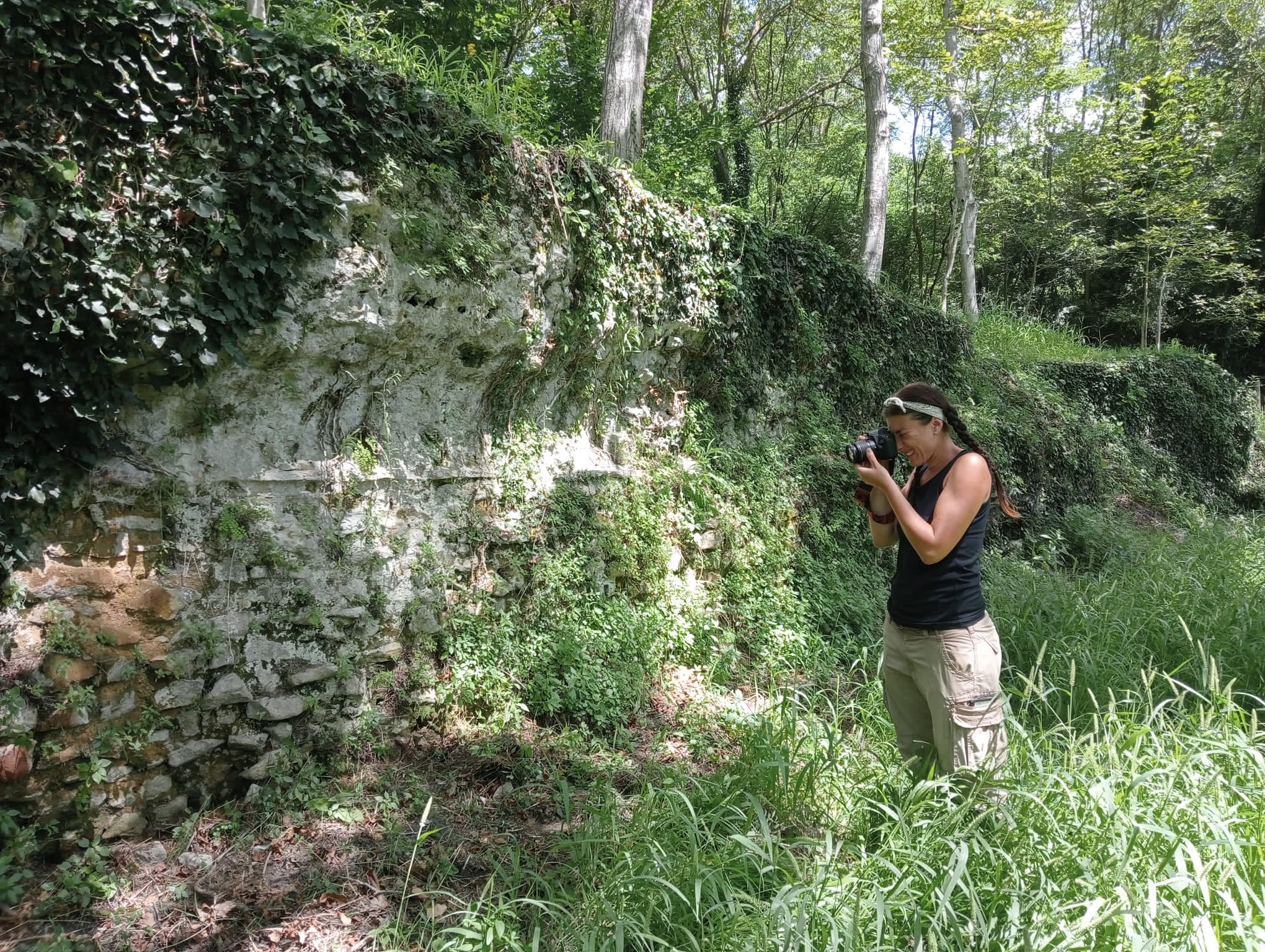
Marina Covolan takes photos for the 3D documentation of a canal bridge at Prata di Principato Ultra.
What has CIVIS3i brought you personally and professionally?
On a personal level, the project has enabled me to put myself forward in the organization of international conferences, and to realize my value as a person and as a researcher. On a professional level, it has enabled me to broaden my network of contacts and opportunities for my future, with the submission of a CNRS project, an ERC and an ANR Access ERC.
What is the importance of the CIVIS3i program for society?
Concerning my post-doctoral project, my research has been shared with the local communities concerned by the passage of the "Samnite Aqueduct" through their territory. In terms of contribution to research, in terms of knowledge of Roman hydraulics in Campania, my study has shed new light on a subject that, until now, had only been dealt with marginally. The two international symposia I have organized have led to more in-depth reflection on the theme of water in the Roman world (2023 event) and, more broadly, from the Bronze Age to the modern era (2024 event). Both events are currently being published, and the book will appear by the end of 2025.
An initiative born of European ambition
The CIVIS Alliance was created in 2019 as part of the European Universities Initiative launched by the European Commission. It aims to promote the mobility of students and researchers, as well as encouraging scientific collaborations of excellence.
CIVIS3i was created to meet these objectives, by supporting post-doctoral research. Since 2021, it has strengthened European collaborations by establishing links with universities, research institutes and over 20 non-academic players. To date, the program's research has led to the publication of four books, some 20 articles in leading journals and the organization of around 100 conferences, as well as numerous results of benefit to society.
Article published on Friday, April 18, 2025.
Discover also


Share on social media or