


The Académie Marine has awarded its thesis prize in the exact sciences to Lauric Reynes, a PhD student and now post-doctoral fellow at the Institut Méditerranéen d'Océanologie, for his thesis entitled "Connectivité et structure génétiques des populations d'Ericaria zosteroïdes (Fucales) and Laminaria rodriguezii (Laminariales) on the French coast".
Reading time: 3 minutes
An oceanography course undertaken at AMU
Lauric Reynes joined Aix-Marseille Université in the second year of his undergraduate degree, studying in the Earth and Life Sciences degree course, with a Sea speciality. He continued his studies with a master’s degreee in oceanography offered by the OSU Pythéas, before applying for a PhD at the l’Institut Méditerranéen d’Océanologie (AMU/CNRS/Université de Toulon/IRD) in 2017. This interdisciplinary thesis focuses on two species of brown algae endemic to the Mediterranean, the Fucales and the Laminaria. Studying these two groups has enabled scientists to determine how environmental characteristics shape the genetic diversity of marine forests.
Brown algae, endemic in Brittany, but also in the Mediterranean
Fucales and Laminaria are highly important species for the functioning of coastal marine ecosystems, both in Brittany and in the Mediterranean, where many of them are endemic. In the Mediterranean, Laminaria form vast forests of algae at depths of around 100 metres. These algae are rare and are distributed in isolated patches where each patch represents a studied population.
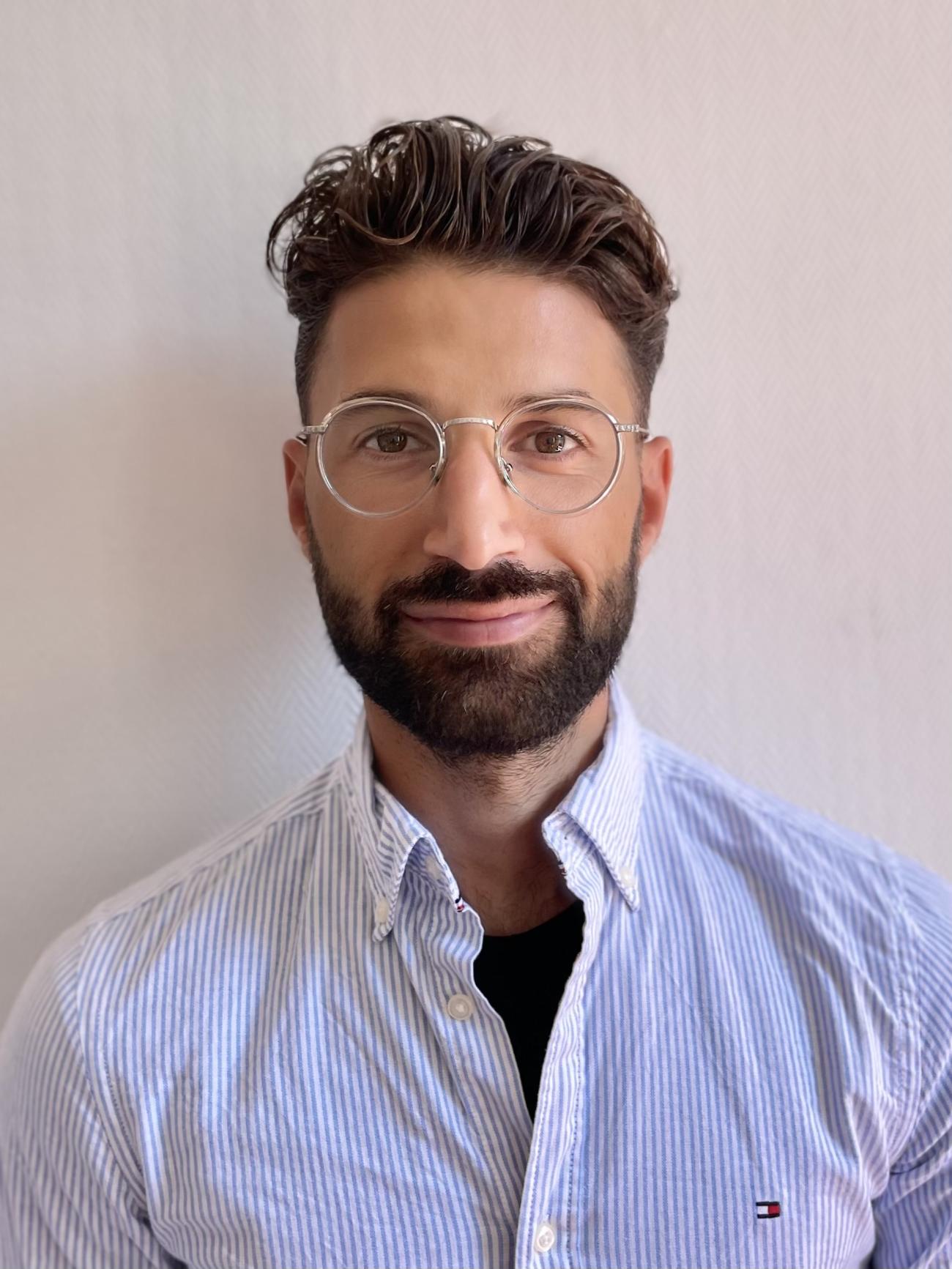
Portrait_Lauric_Reynes
The first aim of the thesis is connectivity, i.e. the link between these different, distant populations. How do they disperse? Spatial isolation in species known for their low dispersal capacity limits the mixing of genes between populations and raises questions about the maintenance of genetic diversity. Yet, the ability of a population or species to react to environmental change or disturbance is closely linked to its genetic diversity. As brown algae marine forests are increasingly affected by a combination of anthropogenic pressures, the fate of these ecosystems will depend on the ability of populations to adapt to this changing environment.
Several factors responsible for genetic diversity
Sequencing of the genomes of Laminaria and Fucales indicates reduced connectivity between populations. We know that the passive dispersal of algae over longer distances can occur via the drift of fertile fragments, mainly by marine currents. Coupling genetics with marine current patterns in the Mediterranean shows that genetic diversity within different algal forests is correlated with marine current movements. The results indicate that genetic structure can be partly explained by marine currents rather than by spatial isolation
The second part of the research work focused on the mode of reproduction of Laminaria. This species is one of the few that reproduces both sexually, via gametes, and clonally. Comparing the genome of this partially clonal species with that of a relatively close sister species that only reproduces sexually (Laminara digitata in the Atlantic) revealed that the ability to reproduce clonally also has an impact on the genomic diversity of populations.
All this work to characterise genetic diversity between highly fragmented, patchy populations not only raises fundamental evolutionary research questions, but also has major implications for the conservation of these species.
Ongoing work on a new algae
After defending his thesis in 2021, Lauric Reynes continued his research on brown algae and evolutionary issues during a post-doctorate at the Roscoff biological station (IRL 3614, CNRS), in partnership with the Max Planck Institute in Tübingen. Today, he is back at the Institut Méditerranéen d'Océanologie as a post-doctoral fellow, continuing to work at the interface between ecology and evolution. This time, his aim is to understand the dynamics of a new invasive species in the Mediterranean, particularly in Marseilles: Rugulopteryx okamurae.
|
You can find Lauric Reynes on :
|
|---|
Discover also


Share on social media or