


On October 17, 2023, Magali Deleuil received the "CNES Astrophysics & Space Sciences" prize from the Institut de France, awarded to the French or foreign author of research carried out in a French laboratory for outstanding work in astrophysics. Find out more about her career, and the four space missions in which she has participated.
Reading time: 4 minutes
Now a true specialist in exoplanets, Magali Deleuil has built her career by twice reorienting her research subjects. After defending her thesis in 1991 at the Université de Provence Aix-Marseille I on evolved stars at the end of their lives, she turned her attention to circumstellar disks. Stars form in clouds of gas and dust, the majority of which are concentrated in the center of the cloud. The remainder is distributed in the so-called circumstellar disk. Analysis of these disks provides information on the initial formation conditions of both stars and planets. Determining the properties of these planets will become the common thread running through her research projects, which now combine detection and modeling.
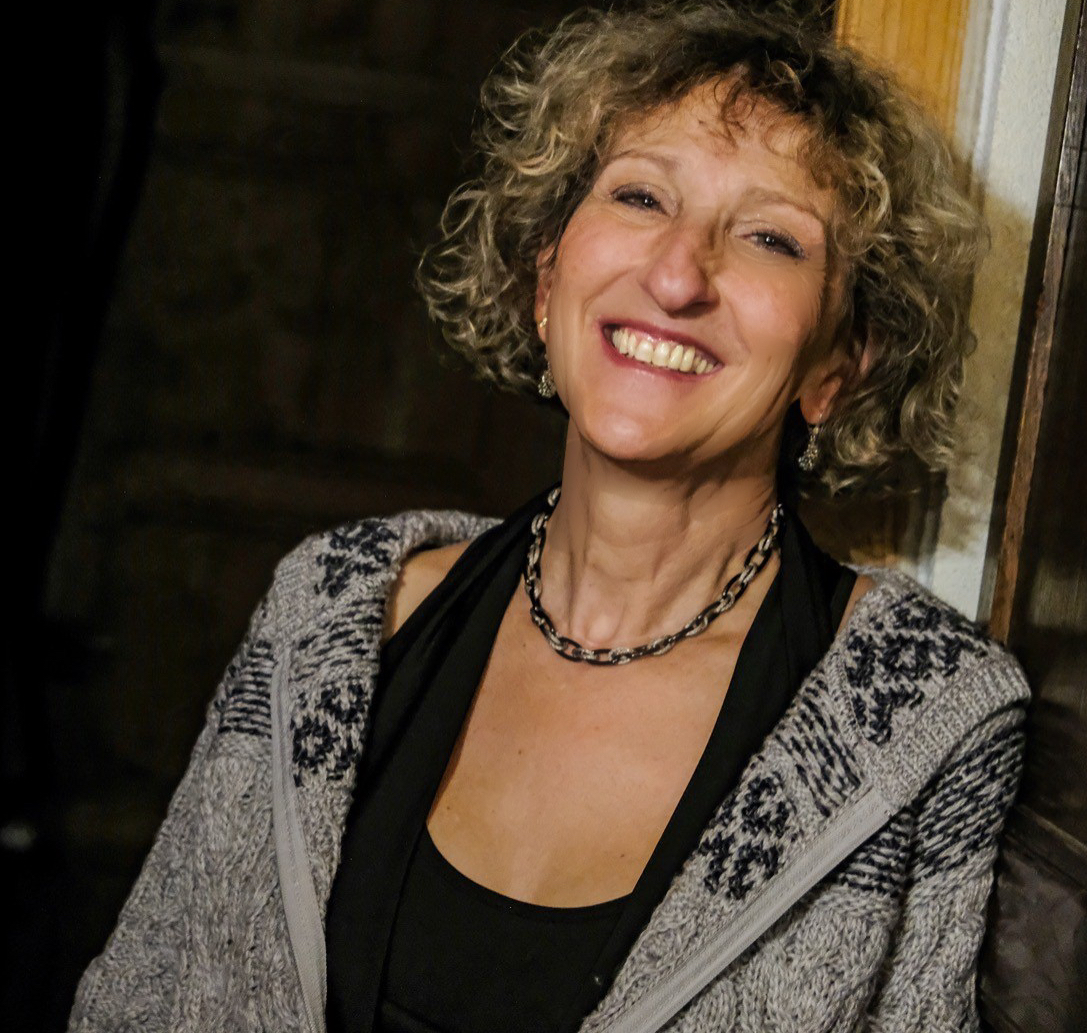
Magali Deleuil - portrait photo
Revealing the populations of planets with short orbital periods
It was during preparations for the FUSE mission in the 90s that she discovered the world of space, working for the first time with space-savvy engineers and technicians. In 1995, the first exoplanet 51 Pegasi b was discovered by Michel Mayor and Didier Queloz at the Observatoire de Haute-Provence (OHP). At the same time, the CoRoT mission was being defined, with the aim of detecting the internal vibrations of stars using asteroseismology. This will enable scientists to determine the internal constitution of stars. The specific features of the planned instrument could also be used to discover new planets using the transit technique, i.e. the detection of a drop in luminosity as the planet passes in front of the luminous disk of its star. The idea appealed to the CNES, and the CoRoT space mission, placed in orbit in 2006, had a dual objective: the search for exoplanets, and asteroseismology. Magali began international scientific coordination of the mission's Exoplanets program, which led, among other things, to the discovery of the first rocky super-Earth.
Understanding the diversity of exoplanets
In 2007, a team of European scientists led by Claude Catala of Paris Observatory, and including Magali Deleuil, proposed the PLATO mission in response to a call for proposals from the European Space Agency. The aim of PLATO was to identify and characterize Earth-like planets around stars similar to our Sun, and also to try to determine evolutionary trends in the populations of planets we observe. Is the Solar System an exception, or is its configuration widespread throughout the Universe? The project was not selected at the final stage in 2011, but was selected in 2014 for the next call for proposals, and entered the development phase in 2017. Magali Deleuil is the French national coordinator for CNES. The launch is scheduled for December 2026.
Following the non-selection of PLATO in 2011, Magali Deleuil joined the Swiss-European team that responded to ESA's call (2012) for a "Small" mission, i.e. based on a small satellite and developed over a short timeframe. With her laboratory, the Laboratoire d'Astrophysique de Marseille (AMU/CNRS), and the support of CNES, she took part in the preparation of the CHEOPS mission, developing and supplying the data reduction software to the Mission Center. This software makes it possible to switch from the series of images as recorded by the instrument, to a light curve ready for scientific analysis. In operation since March 2020, the mission is a success: CHEOPS has already helped determine the properties of several dozen planets, as well as refining the architecture of some multi-planet systems.
In collaboration with a professor who has joined Aix-Marseille Université as a Chair of Excellence, and through the supervision of two theses, they are developing a model of internal planetary structure to determine the composition of small planets and thus better understand their surprising diversity. Also within the university, Magali helped found the Origins Institute in 2021. She is currently Deputy Director of Research and Development.
Research supported by the Institut Universitaire de France
All in all, Magali Deleuil has taken part in four space missions during her career as a University Professor at Aix-Marseille Université. This was made possible by her three delegations within the Institut Universitaire de France (IUF) in 2009, 2016 and 2021. These successive appointments are proof of the high quality of her work and research projects, and have enabled her to continue her research and project activities at the university, thanks to a two-thirds reduction of her teaching duties. Last but not least, she plays an active role in the dissemination of science, giving several talks a year to the public at astronomy festivals, and acting as scientific referent for various events such as exhibitions, videos, shows, etc.
Portrait written by Fanny Trifilieff and published on Monday, October 23, 2023.
Discover also


Share on social media or