


Noroviruses, present in marine waters and responsible for gastroenteritis epidemics, represent a major challenge for oyster farming professionals, who regularly see their production impacted, particularly during the festive end-of-year periods. Faced with this situation, innovative solutions are being developed to protect oyster farming facilities. The Ultranoro project is a world-first study of a potential solution: ultrafiltration to purify seawater.
Reading time: 3 minutes
The Équipe Procédés Membranaires (EPM), from the Laboratoire de Mécanique Modélisation et Procédés Propres (M2P2) at Aix Marseille Université, is carrying out a world first: a full-scale evaluation of the potential of ultrafiltration for the protection of oyster farming facilities. The "Ultranoro" project, carried out with Ifremer, the Comité régional de la Conchyliculture des Pays de la Loire and the Syndicat Mixte pour le Développement de l'Aquaculture et de la Pêche en Pays de la Loire, aims to purify seawater using ultrafiltration. The aim is to eliminate noroviruses, responsible for gastroenteritis epidemics, from the water used to supply oyster storage tanks.
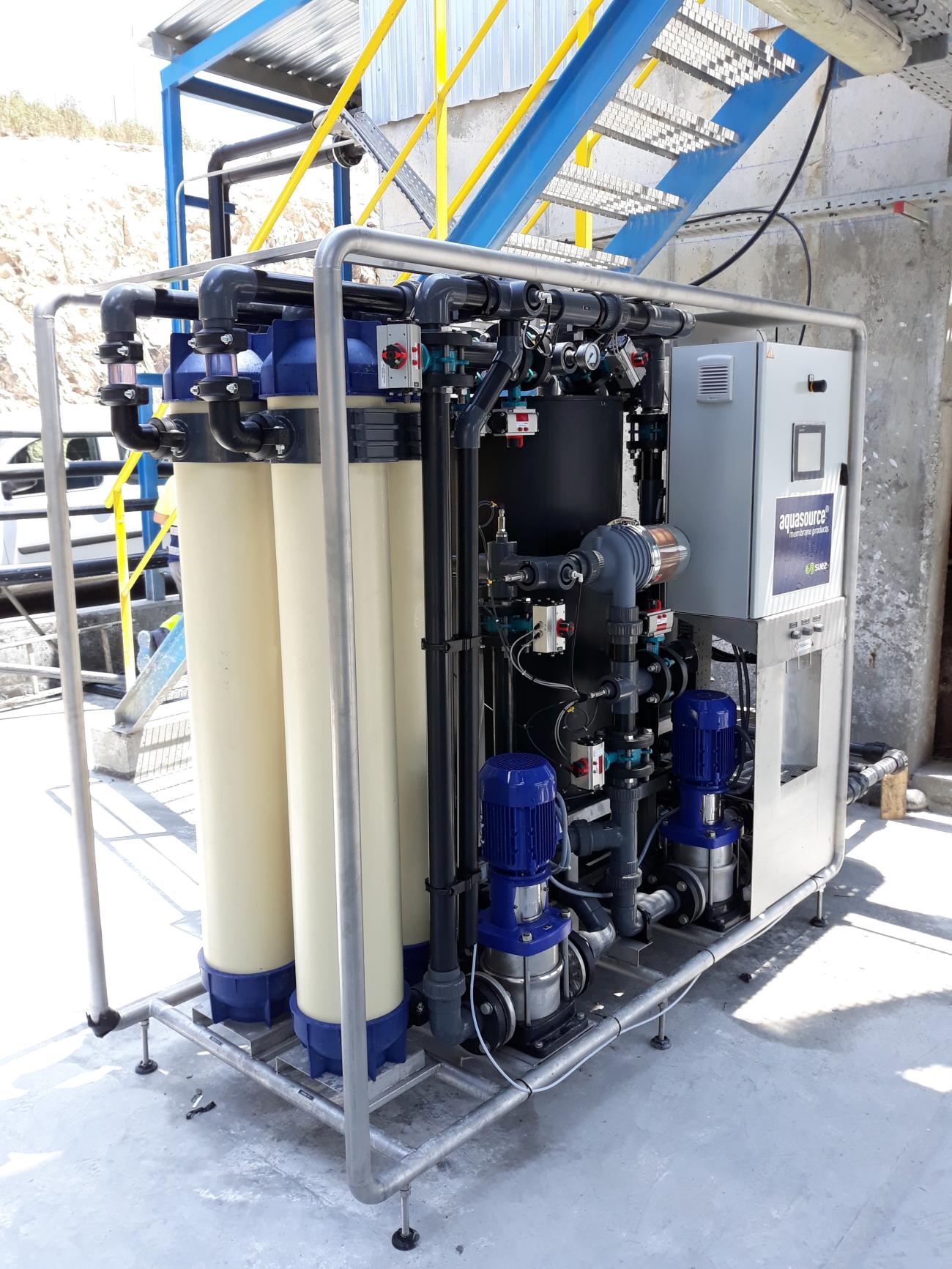
M2P2 - Illustration_Unité_Filtration_Huitres
To stop the norovirus detected in sewage treatment plants, rivers and the Atlantic Ocean, as well as in animals on the foreshore, an ultrafiltration unit protects oysters in a tank provided by a professional oyster farmer. Capable of treating 15 m3.h-1, it will be installed from February to April 2025 at two oyster-farming sites.
How norovirus makes its way onto our plates
The norovirus' path to contamination is now well known. It begins in the stools of infected people, which contaminate wastewater. When this water is inadequately treated, or during heavy rainfall, it can spill out into the environment and then into the sea, where oysters are found. These molluscs, veritable living filters, pump up to 5 liters of seawater per hour to feed, accumulating the virus in their tissues.
Norovirus can persist in oysters for several weeks, without altering the appearance or taste of the shellfish. Its infectious dose is very low: just 18 viral particles can cause an infection, which increases the risk of becoming ill after eating contaminated oysters.
Avoiding major losses for the industry in the future
In 2023, norovirus-related losses reached 7 million euros in the Bassin d'Arcachon alone, and potentially between 21 and 28 million euros nationwide, according to CNC estimates. The results of the Ultranoro project should provide a viable solution for the industry, which regularly suffers heavy losses.
By combining the skills of researchers and industry professionals, the Ultranoro project paves the way for new methods of protection, essential for the long-term future of oyster farming.
Contact à ajouter
Contact à ajouter
Ultranoro is a project funded by the Pays de la Loire Region.
Article published on Wednesday 19 March 2025.
Discover also


Share on social media or