

For the 2024 edition of the L'Oréal-UNESCO Young Talent Award for Women in Science, 25 female doctoral candidates and 10 female post-doctoral candidates were honored in France. They were selected from 771 applications by a jury of 43 researchers from the French Academy of Sciences. Jehanne Aghzadi is one of the winners.
Reading time: 3 minutes
A thesis on multiple sclerosis
Growing up in Morocco, it was thanks to a scholarship to study in Miami that Jehanne Aghzadi discovered her passion for neuroscience. After a master's degree in biochemistry, she decided to return to her first interest, multiple sclerosis, which she had already studied during her undergraduate years. It's a disease that fascinates her, because it goes against everything we know about the human body: instead of defending us, the immune system rebels and turns against us. Multiple sclerosis was fittingly the subject of an AMIDEX/NeuroSchool thesis offer in Marseille at the Institut de NeuroPhysiopathologie (INP, amU/CNRS): to study the role of TWEAK, a neuro-inflammatory protein, during multiple sclerosis. Jehanne applied for and won the contract alongside Dr Sophie Desplat-Jégo of the SInBioSE team.
Improving monitoring of neurodegenerative diseases
Now in the third year of her thesis, Jehanne Aghzadi is working on the possibility of making the TWEAK protein a blood biomarker for the disease. The SInBioSE team had already demonstrated that the neuroinflammatory protein TWEAK increased in patients' blood during the inflammatory period of multiple sclerosis. As the management of the disease is burdensome for patients, the aim is to find a routine, minimally invasive test that would give the opportunity to monitor the state of inflammation in the brain. A simple blood test would suffice. This technique would improve patient follow-up, enabling more personalized medicine, by adapting drugs or their quantity, for example.
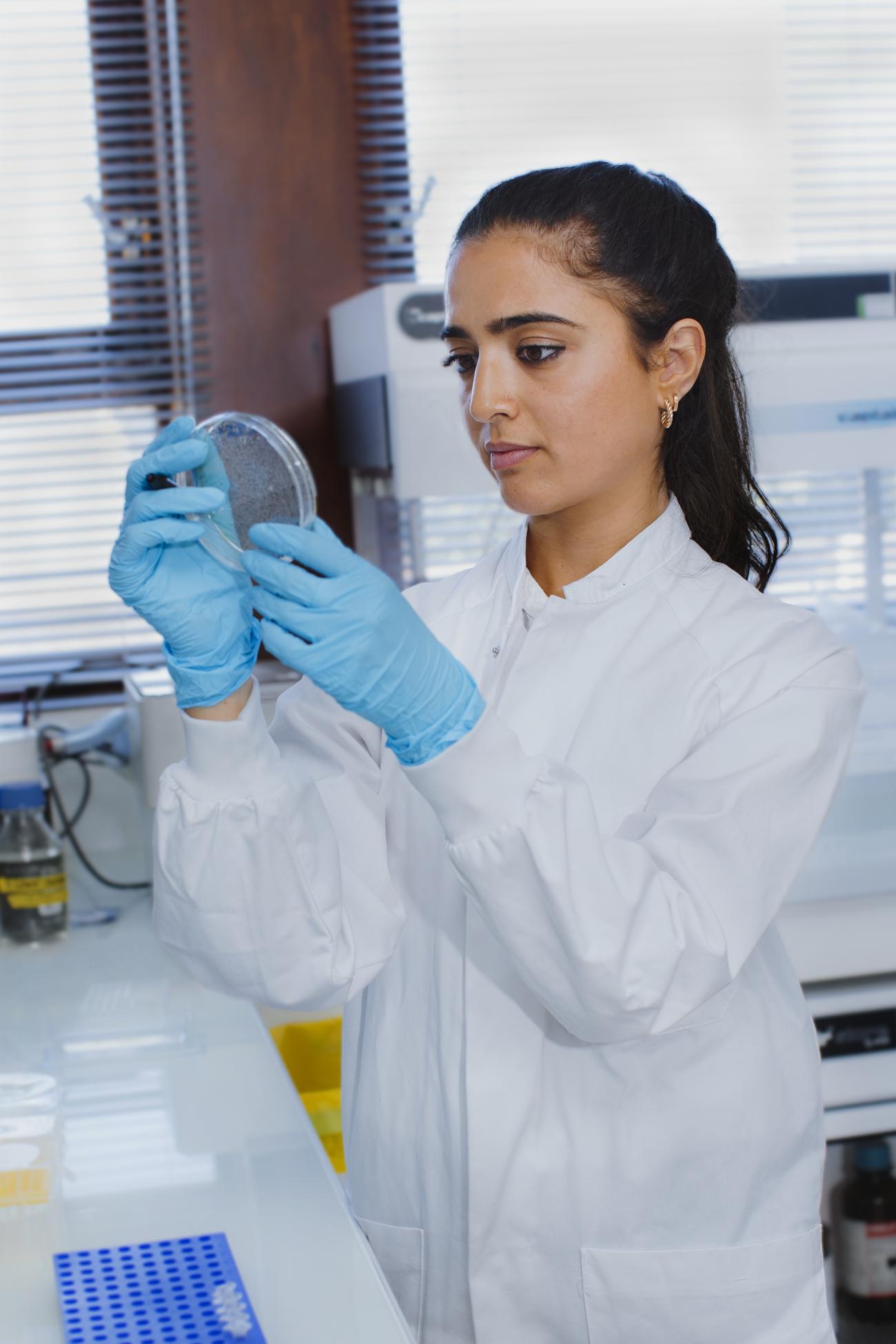
The team also discovered that some patients produce autoantibodies against TWEAK, while others do not, and that this is accompanied by a reduction in disability. Understanding and characterizing these autoantibodies could advance the development of new therapies.
Meeting other inspiring scientists and inspiring others in turn
Following the advice of her mentor, Jehanne applied for the L'Oréal-UNESCO Young Talent Award for Women in Science. Her motivation? "To meet other women at the start of their careers who are doing extraordinary things in their professions". She also points out a sad parallel between young women and her research subject: multiple sclerosis, which affects mostly women, with an average age of diagnosis of around 32.
Finally, mentoring young women wasalready an integral part of her way of doing research, having accompanied several female students during her Master's degree in San Diego and during her thesis years at the INP. Jehanne also hopes to use her winnings (editor's note: 15,000 euros) to further her training in mentoring and leadership, and to make scientific careers more visible and inclusive for young people who don't always see science as an accessible option.
Article published on October 10, 2024
Photo credits: Richard PAK and Clémence LOSFELD.
Discover also


Share on social media or